
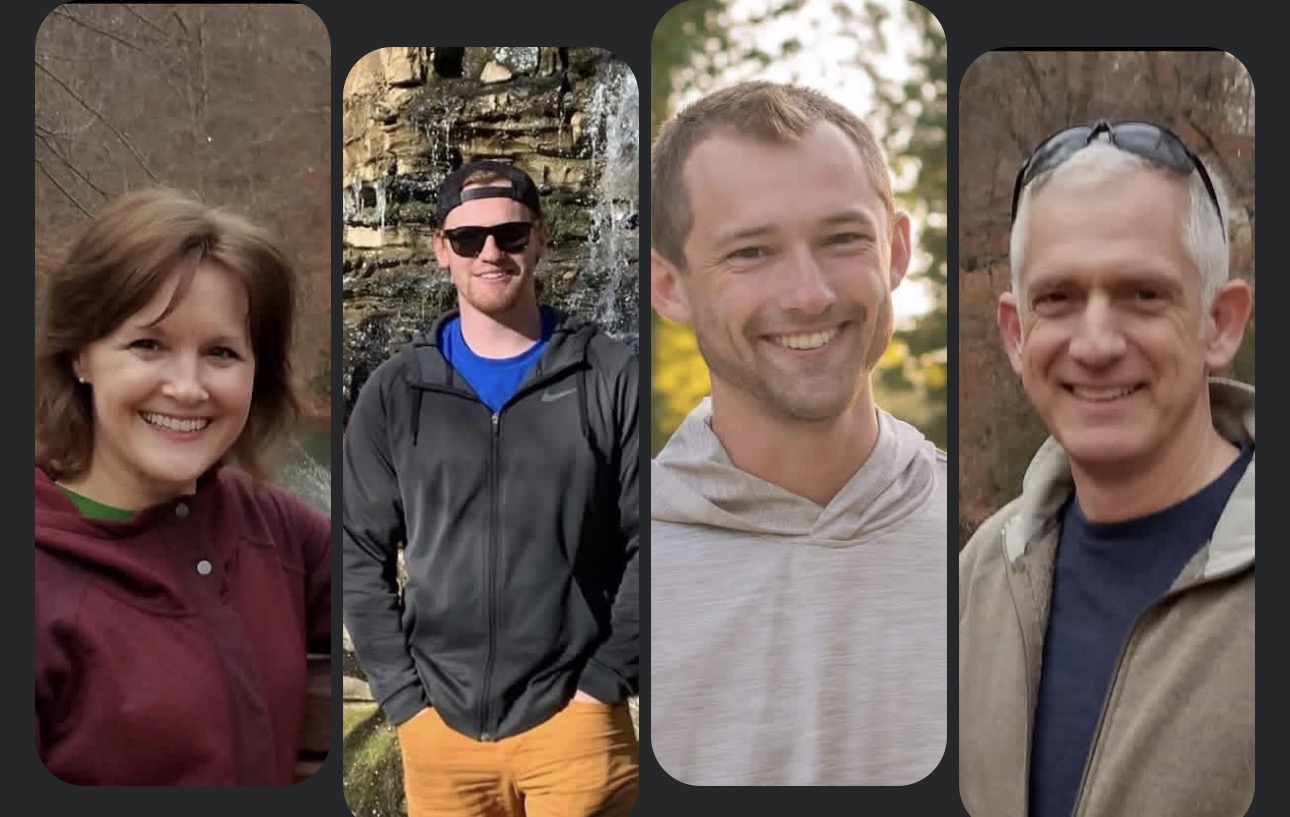
James Moffatt, Leasa Moffatt, Andrew Moffatt, William Moffatt: Four Family Members from Huntsville Killed in Mooney M20P Plane Crash Near Union County Airport, South Carolina – NTSB and FAA Investigating.
UNION, S.C. – A routine refueling stop turned into an unthinkable tragedy Friday evening when a Mooney M20P single-engine aircraft crashed near Union County Airport in South Carolina, killing all four people on board. The victims, all from Huntsville, Alabama, have been identified as pilot James Moffatt, 60; his wife Leasa Moffatt, 61; their son Andrew Moffatt, 30; and another son William Moffatt, 28.
The family was en route from the Raleigh-Durham, North Carolina area to their home in Huntsville when they made a scheduled stop at Union County Airport to refuel. Shortly after departing or while maneuvering near the airport around 6:30 p.m. Friday, the aircraft went down under circumstances that remain unclear. Emergency responders, aided by the South Carolina Forestry Service, had to use a bulldozer to clear a path through dense terrain to reach the smoke plume marking the wreckage.
The Union County Coroner’s Office confirmed the identities after recovery efforts. The Federal Aviation Administration (FAA) and the National Transportation Safety Board (NTSB) have launched a full investigation, with an NTSB team already dispatched to the scene. Authorities have noted that a final report on the probable cause may take 12 to 24 months — a timeline that offers little comfort to the grieving family members left behind.
For the Huntsville community and for those who knew the Moffatts, the loss is almost too much to bear. Four lives, spanning two generations, extinguished in a fiery crash just miles from a small South Carolina runway. This is their story, and the story of a tragedy that has left investigators searching for answers in the wreckage.
The Victims: The Moffatt Family of Huntsville, Alabama
James Moffatt, 60 – The pilot of the Mooney M20P. James was an experienced aviator, according to friends and preliminary reports. A resident of Huntsville — a city known for its aerospace and engineering heritage, home to NASA’s Marshall Space Flight Center and the U.S. Army’s Redstone Arsenal — James may have had a background in aviation or related fields. Neighbors describe him as a meticulous, safety-conscious individual who loved flying as both a passion and a practical means of travel.
Leasa Moffatt, 61 – The wife of James and mother of Andrew and William. Leasa was a beloved figure in her community, known for her warm smile, volunteer work, and devotion to her family. She often accompanied James on cross-country flights, treating their journeys as mini-adventures. Her sudden death has left a void in the lives of her extended family and many friends.
Andrew Moffatt, 30 – The elder son. Andrew had recently celebrated his 30th birthday. Friends say he was following in his father’s footsteps with an interest in engineering and technology. He was described as thoughtful, curious, and deeply close to his younger brother.
William Moffatt, 28 – The younger son. William was known for his sense of humor and his passion for the outdoors. He and Andrew were inseparable, often seen together at family gatherings and community events. Both young men had their entire futures ahead of them.
The Moffatt family had been visiting the Raleigh-Durham area — possibly for business, a family occasion, or a short getaway. The exact purpose of their trip has not been released by authorities. What is known is that they boarded their Mooney M20P on Friday, made a planned refueling stop at Union County Airport, and then tragedy struck.
The Crash: A Routine Stop Turns Deadly
Union County Airport (KUDG) is a small, general aviation airport located just east of the city of Union, South Carolina. It has a single runway (5/23) and is primarily used by private pilots, flight training schools, and occasional corporate aircraft. It is not a busy hub; on a typical Friday evening, the airport sees little traffic.
The Moffatts’ Mooney M20P — a popular, high-performance single-engine aircraft known for its speed and efficiency — arrived in Union sometime before 6:30 p.m. to refuel. Refueling stops are routine on cross-country flights, especially for aircraft with limited range or when pilots prefer to avoid fuel starvation risks.
After refueling, the aircraft presumably departed or was preparing to depart. The crash occurred near the airport — though “near” could mean on approach, on takeoff, or in a low-altitude maneuver. The FAA’s preliminary statement indicates the crash happened around 6:30 p.m., which would have been dusk (sunset in Union, S.C., on April 17 was approximately 7:58 p.m., so there was still daylight).
The exact sequence of events is unknown, but the outcome was catastrophic: the Mooney M20P struck terrain, caught fire (implied by the smoke plume), and was destroyed. There were no survivors.
The Response: Bulldozers, Forestry Service, and Coroner
The crash site was not immediately accessible by road or foot. The aircraft went down in a remote, wooded area near the airport, likely in thick brush and trees common to the South Carolina Piedmont region. First responders from the Union County Sheriff’s Office and emergency services could see smoke but could not reach the wreckage.
That is when the South Carolina Forestry Service stepped in. Using a bulldozer, they cleared a path through the undergrowth and timber, allowing deputies, coroner’s officials, and later FAA and NTSB investigators to reach the scene. The use of heavy equipment to access a crash site is unusual but necessary in such rugged terrain.
“We had a report of a possible downed aircraft and smoke in the area,” a Union County Sheriff’s Office spokesperson said. “The Forestry Service’s assistance was critical. Without that bulldozer, it would have taken hours to reach the site on foot.”
Once on scene, responders confirmed that all four occupants were deceased. The Union County Coroner’s Office took custody of the remains and began the identification process. By the following day, the victims were publicly identified as James, Leasa, Andrew, and William Moffatt.
The aircraft wreckage will remain in place under NTSB jurisdiction until investigators complete their on-site examination. Authorities have indicated that the wreckage may be removed sometime next week and transported to a secure facility for further analysis.
The Investigation: NTSB and FAA Take the Lead
The National Transportation Safety Board (NTSB) is the lead investigative agency for all civil aviation accidents in the United States. The FAA also participates, but the NTSB has final authority over the determination of probable cause.
An NTSB team has been dispatched to Union County. Their work will focus on three primary areas:
1. The Pilot (James Moffatt) – Investigators will examine James Moffatt’s pilot certificates, medical history, flight hours, recent training, and any potential impairment (toxicology tests will be conducted). They will also look at his decision-making, including whether he filed a flight plan, obtained weather briefings, and performed preflight checks.
2. The Aircraft (Mooney M20P) – The wreckage will be reconstructed to the extent possible. Investigators will look for signs of mechanical failure, including engine malfunction, control system issues, fuel contamination, or structural failure. The aircraft’s maintenance records will be reviewed.
3. The Operating Environment – Weather at the time of the crash, air traffic control communications (if any), airport conditions, and terrain will be analyzed. The Union County Airport is uncontrolled (no control tower), so pilots communicate via a common traffic advisory frequency.
The NTSB has stated that a preliminary report will be issued within a few weeks, but the final report — including the probable cause and any contributing factors — is expected to take 12 to 24 months. This timeline is typical for general aviation accidents, which often require extensive laboratory analysis and engineering review.
Why Would a Plane Crash Near an Airport After Refueling?
Aviation experts note that crashes occurring shortly after takeoff or near an airport are often related to one of several factors:
· Engine failure – The most critical phase of flight is climb-out, where an engine failure at low altitude leaves little time for troubleshooting or emergency landing.
· Fuel contamination or mismanagement – Even after refueling, contaminated fuel (water, debris) or a failure to switch fuel tanks could cause power loss.
· Weight and balance issues – If the aircraft was loaded improperly, it could become uncontrollable.
· Pilot error – Misjudging airspeed, stall recovery, or spatial disorientation, especially if flying in dusk conditions.
· Mechanical malfunction – Any number of systems (flaps, flight controls, landing gear) could fail.
Given that the family had just refueled, fuel starvation is unlikely — but fuel contamination or a fuel system problem remains possible. The NTSB will examine fuel samples from the airport’s storage tanks and from the aircraft’s wreckage.
The Community Reaction: Union County and Huntsville Mourn
Union County, South Carolina, is a rural community accustomed to quiet, uneventful days. A plane crash killing four people is a jolt to the system.
“You never expect something like this here,” said a local business owner who asked not to be named. “The airport is small. Mostly hobbyists and crop dusters. To hear that a whole family died just miles from our runway… it’s heartbreaking.”
In Huntsville, Alabama, the grief is even more profound. The Moffatts were known in their neighborhood and in various civic and church communities. Social media posts began appearing Saturday morning, expressing shock and offering condolences.
“We are absolutely devastated,” wrote a friend of the family on Facebook. “James, Leasa, Andrew, and William were the kind of family everyone admired. Always together, always supportive of each other. To lose all four at once is beyond comprehension.”
A candlelight vigil is being planned in Huntsville, though details have not been finalized. The family’s surviving relatives — parents, siblings, cousins, and in-laws — are now faced with the unimaginable task of planning four funerals.
Broader Context: General Aviation Safety
While commercial aviation is extraordinarily safe, general aviation (private planes) has a higher accident rate. According to the NTSB, there were approximately 1,085 general aviation accidents in the U.S. in 2024 (latest full-year data), resulting in about 350 fatalities. The Mooney M20 series has a generally good safety record, but like any aircraft, it is unforgiving of mistakes or mechanical issues.
The Moffatt family’s crash is a stark reminder that even experienced pilots flying well-maintained aircraft can face tragedy. The NTSB’s investigation will not bring them back, but it may yield safety recommendations that prevent future accidents.
What Happens Next?
In the coming days and weeks:
· The NTSB will complete its on-site investigation and transport the wreckage to a facility in Washington, D.C., or a regional center.
· Autopsies and toxicology tests will be performed on the remains of James, Leasa, Andrew, and William Moffatt.
· A preliminary NTSB report will be released, likely within 2-4 weeks, summarizing factual findings without a probable cause.
· Funeral arrangements will be announced by the Moffatt family in Huntsville. Given the magnitude of the loss, a joint memorial service is likely.
· The final NTSB report may take 12 to 24 months. In the meantime, the family and community must live with unanswered questions.
Conclusion: Four Lives, One Tragic Moment
The Moffatt family did not set out on Friday for a tragedy. They set out for home — from Raleigh-Durham to Huntsville, with a brief stop in Union County, South Carolina. A refueling stop should have been a minor inconvenience, a few minutes on the ground before continuing a routine flight.
Instead, that stop became the end of the road. James Moffatt, 60, pilot and husband. Leasa Moffatt, 61, wife and mother. Andrew Moffatt, 30, son and brother. William Moffatt, 28, son and brother. Four people, four lives, one family tree snapped off at its roots.
As the NTSB and FAA sift through wreckage and records, the people of Union County and Huntsville will hold vigils, share memories, and cry together. The final report may eventually explain what went wrong — but it will never explain why such a good family had to be taken so suddenly, so completely.
Until then, the Moffatt name will be remembered not for the crash, but for the love they shared and the lives they lived. And Union County Airport will forever be marked by the tragedy of April 17, 2026 — the day four Alabamians came to refuel and never left.
Leave a Reply